
Material Selection in Pharmaceutical Equipment: SS 304 vs SS 316L
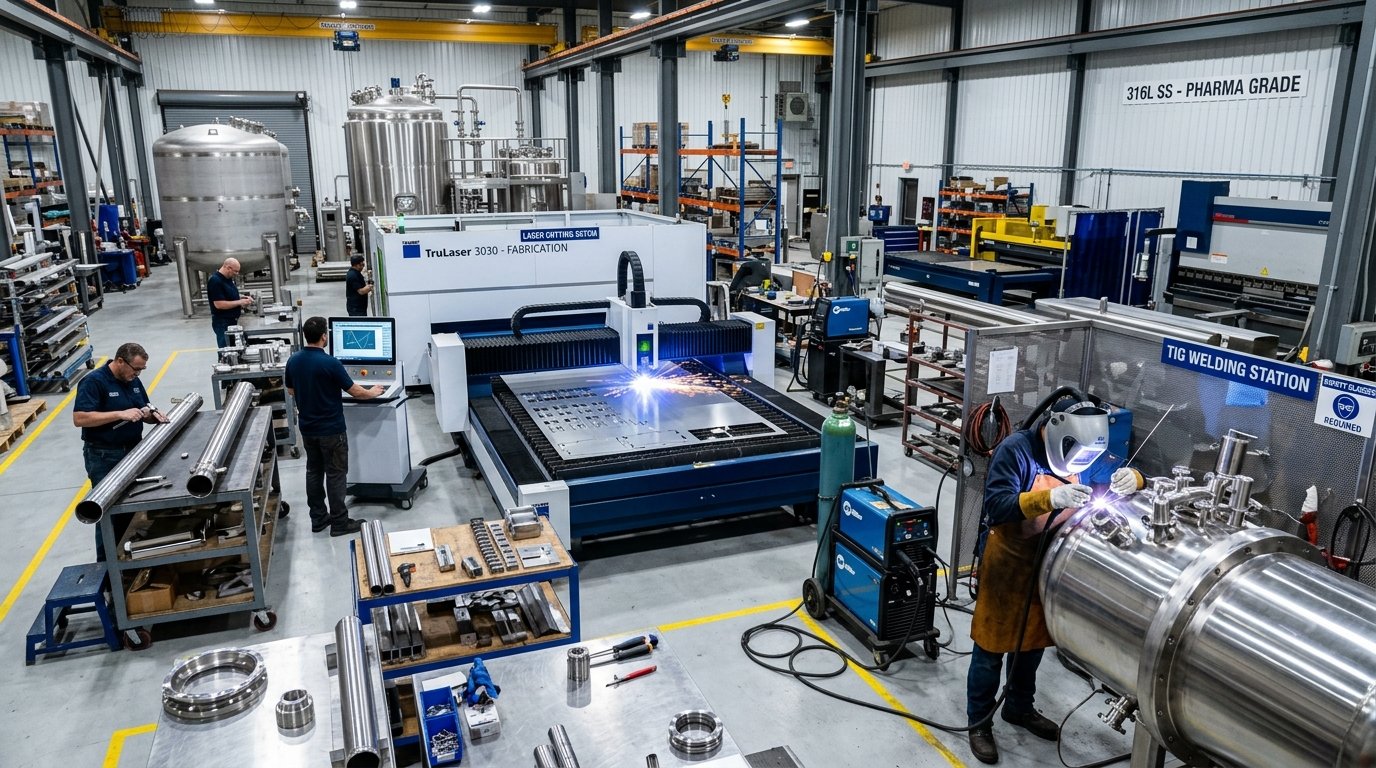
- SS 316L contains 2-3% Molybdenum, providing crucial resistance to chloride pitting and aggressive sanitation chemicals.
- SS 304 is ideal for structural frames, secondary lab cabinetry, and external cladding where direct product contact does not occur.
- Surface finish (Ra < 0.4 µm achieved via electropolishing) is as critical as alloy chemistry to prevent bacterial biofilm attachment.
- Mill Test Certificates (MTC 3.1) must always accompany pharmaceutical equipment for FDA audit traceability.
The Critical Role of Metallurgy in Sterile Pharmaceutical Environments
In modern pharmaceutical manufacturing and aseptic fill-finish suites, equipment surfaces are constantly subjected to severe chemical stress. Aggressive cleaning agents, vaporized hydrogen peroxide (VHP), quaternary ammonium compounds, and chlorine-based sanitizers are regularly deployed to eliminate biological contaminants.
Selecting the incorrect stainless steel grade does not merely reduce the mechanical lifespan of the hardware; it risks microbial biofilm harborage, rust particulate contamination, and costly regulatory non-compliance during US-FDA or WHO-GMP inspections.
The Core Chemical Difference: The Power of Molybdenum
While both SS 304 and SS 316L belong to the austenitic family of stainless steels, the defining divergence lies in the addition of 2.0% to 3.0% Molybdenum (Mo) in SS 316L.
Molybdenum significantly increases the alloy’s Pitting Resistance Equivalent Number (PREN). When exposed to saline buffers, acidic active pharmaceutical ingredients (APIs), or chlorine disinfectants, SS 304 is vulnerable to micro-pitting corrosion. The addition of molybdenum in SS 316L stabilizes the passive chromium oxide protective film, preventing microscopic pitting where bacteria can hide.
Why the "L" Designation Matters: Preventing Intergranular Corrosion
The "L" in SS 316L denotes Low Carbon (maximum 0.03% carbon compared to 0.08% in standard SS 316). During high-temperature TIG welding, excess carbon combines with chromium to form chromium carbides at the grain boundaries — a destructive phenomenon known as sensitization.
Sensitization depletes chromium at the weld zones, rendering the joints prone to rapid intergranular corrosion. By utilizing SS 316L and argon-shielded orbital welding, Himalayan Steel Industries guarantees zero weld decay and complete sanitary integrity.
Practical Guidelines for Facility Designers
Direct Product-Contact Surfaces: Always specify SS 316L with an electropolished finish (Ra < 0.4 µm). This includes cleanroom pass box inner chambers, dispensing booths, and sterile processing vessel contact parts.
Non-Contact & Structural Enclosures: SS 304 with a fine satin hairline finish (240 grit) provides exceptional durability and cost-effectiveness for support frames, outer locker housings, and utility piping.
Designing Equipment for Your Facility?
Share your user requirements or cleanroom layout drawings with Himalayan Steel Industries in Baddi. Our metallurgical engineers provide material test certificates (MTC), 3D CAD modeling, and competitive fabrication quotes.
More Engineering Insights
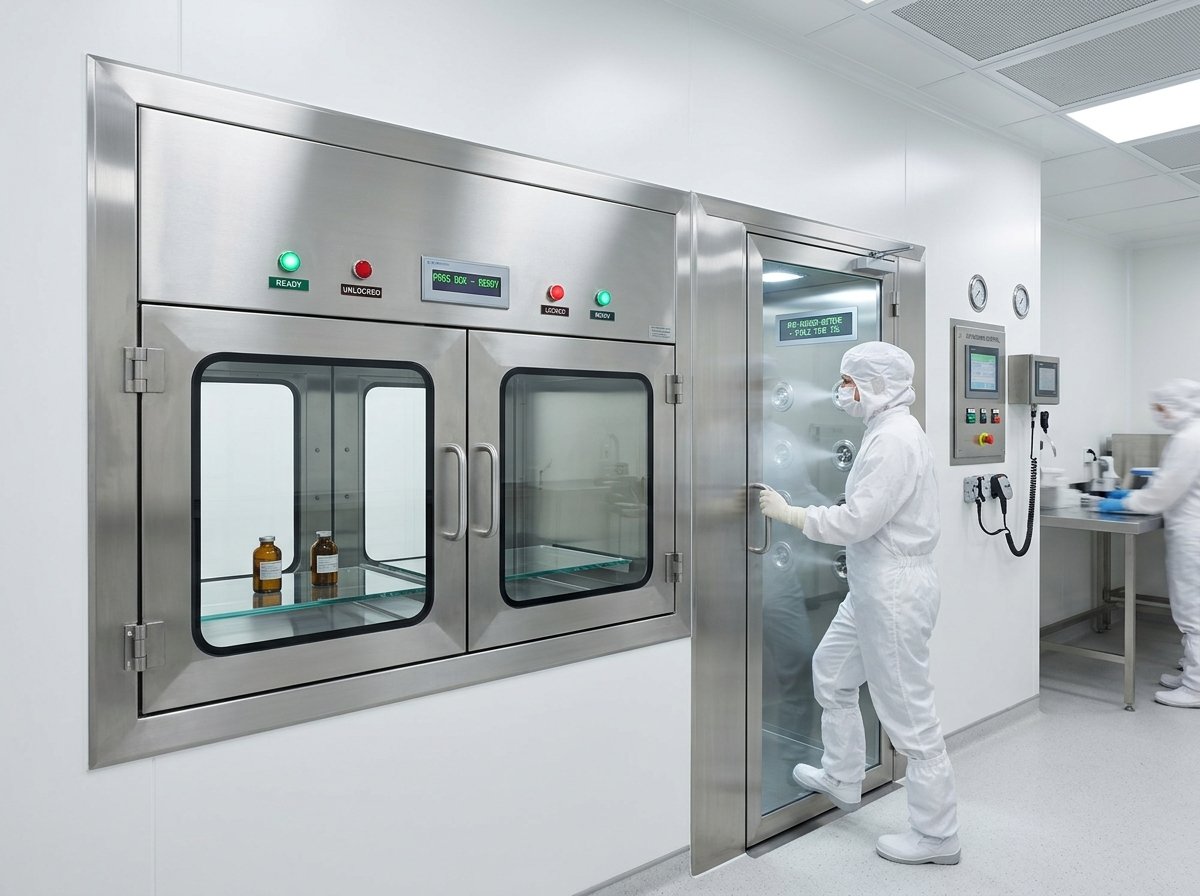
Understanding GMP Requirements for Pass Boxes & Air Showers
A comprehensive engineering guide to ensuring cleanroom transfer equipment interlocks and HEPA filtration meet ISO 14644 standards without compromising pressure cascades.
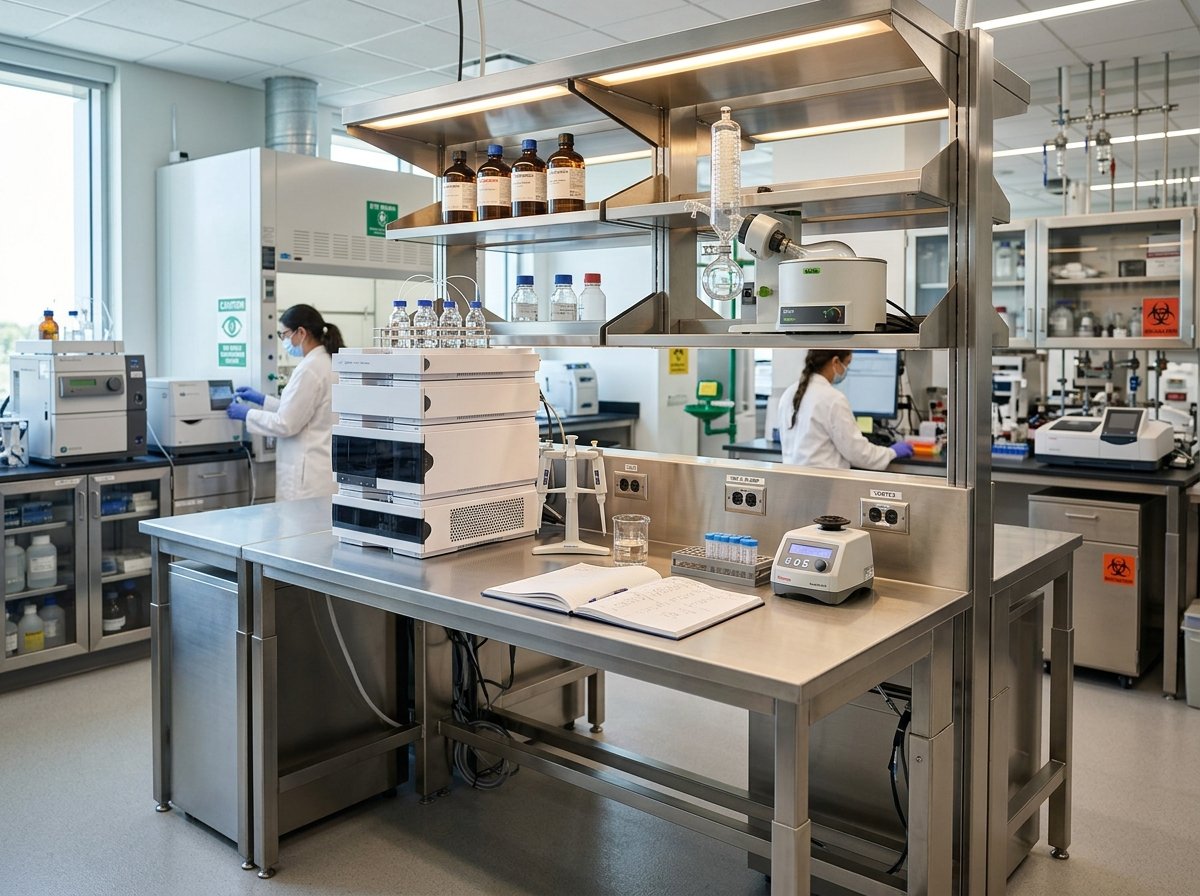
Benefits of Modular Laboratory Furniture Systems in Modern R&D
How flexible, configurable workstation architectures enhance analytical laboratory efficiency and accommodate evolving HPLC and spectrometry instruments.