
Understanding GMP Requirements for Pass Boxes & Air Showers
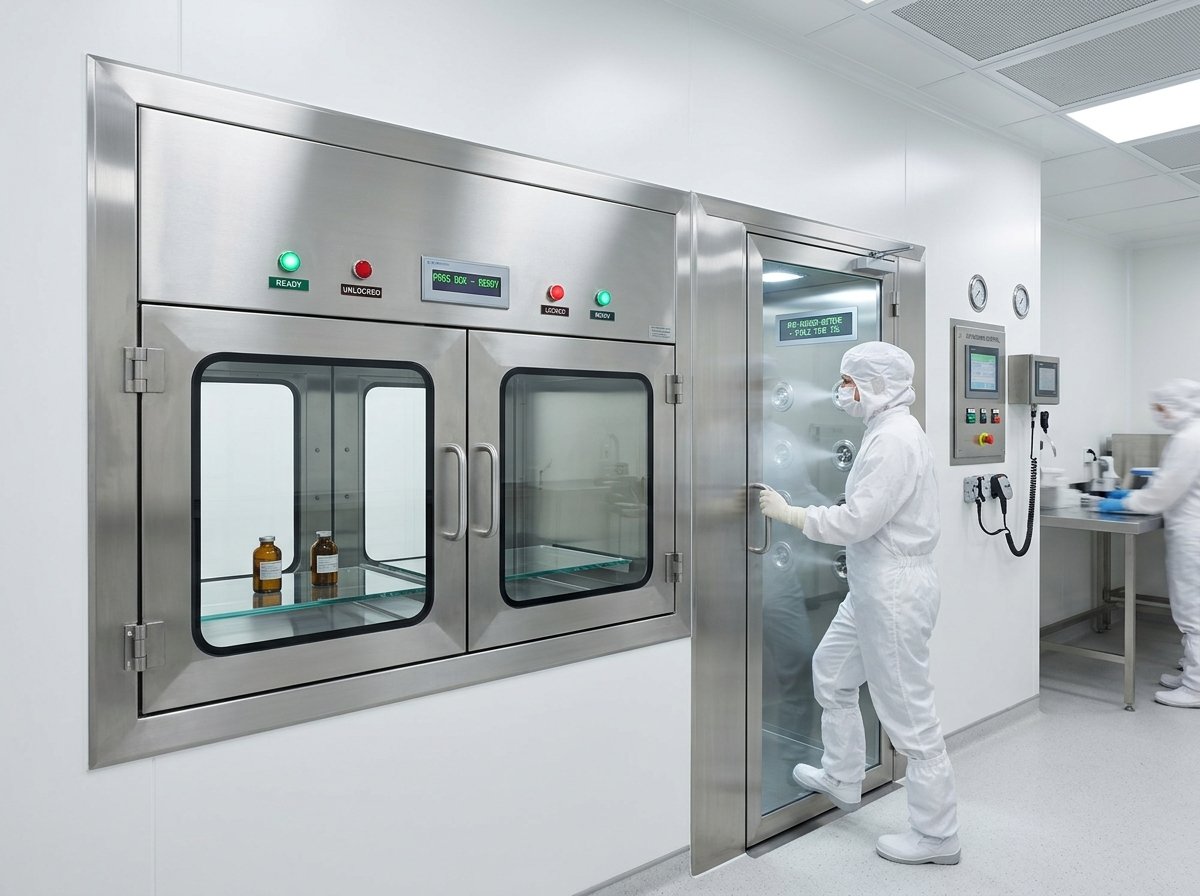
- Static pass boxes are designed for material transfer between cleanrooms of identical air classification.
- Dynamic pass boxes incorporate laminar airflow (ISO Class 5) and HEPA recirculation for cross-classification transfer.
- Electromagnetic door interlocks prevent both doors from opening concurrently, maintaining room pressure differentials.
- Germicidal UV lamps must be interlocked with door micro-switches to protect cleanroom personnel from UV-C radiation.
Airlock Integrity and Contamination Prevention
In sterile pharmaceutical facilities, material transfer represents one of the highest risk vectors for particulate and microbial ingress. Pass boxes and air showers act as physical and aerodynamic barriers that isolate sterile production suites from preparation corridors.
ISO 14644-1 defines strict cleanliness classes. A failure in pass box sealing or interlocking can cause instantaneous pressure drops, drawing unfiltered ambient air into aseptic filling zones.
Static vs. Dynamic Pass Boxes: Engineering Criteria
Static Pass Boxes: Feature sealed electromagnetic doors and UV sterilization lamps. They are strictly intended for transfer between adjacent rooms sharing the same environmental grade (e.g., Grade C to Grade C).
Dynamic Pass Boxes: Equipped with integrated centrifugal blowers, mini-pleat HEPA filters (99.997% efficiency at 0.3 µm), and Magnehelic differential pressure gauges. They actively purge airborne particulates from containers as they pass across different environmental grades (e.g., Grade D to Grade B).
Key Architectural Features Demanded by Auditors
Coved Internal Corners: Internal edges must feature a minimum 15mm radius (R15 coving) to eliminate sharp 90-degree corners that trap powder or resist disinfectant wipe-downs.
Food-Grade Silicone Gasketing: Hollow core silicone seals embedded in stainless steel channel recesses ensure airtight compression when the doors latch.
Designing Equipment for Your Facility?
Share your user requirements or cleanroom layout drawings with Himalayan Steel Industries in Baddi. Our metallurgical engineers provide material test certificates (MTC), 3D CAD modeling, and competitive fabrication quotes.
More Engineering Insights
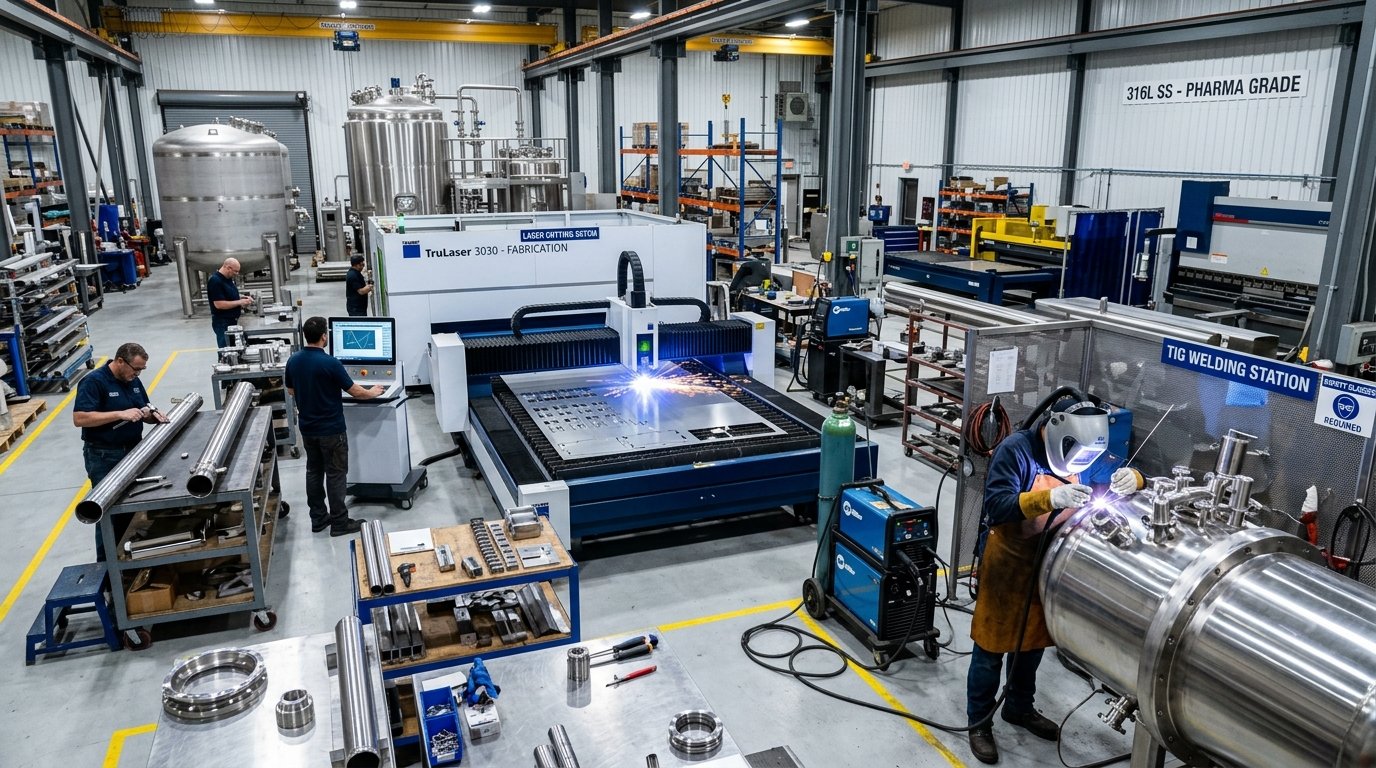
Material Selection in Pharmaceutical Equipment: SS 304 vs SS 316L
Choosing the correct grade of stainless steel is essential for cGMP compliance and corrosion resistance. Learn when to specify SS 316L with molybdenum addition versus SS 304 in pharmaceutical manufacturing lines.
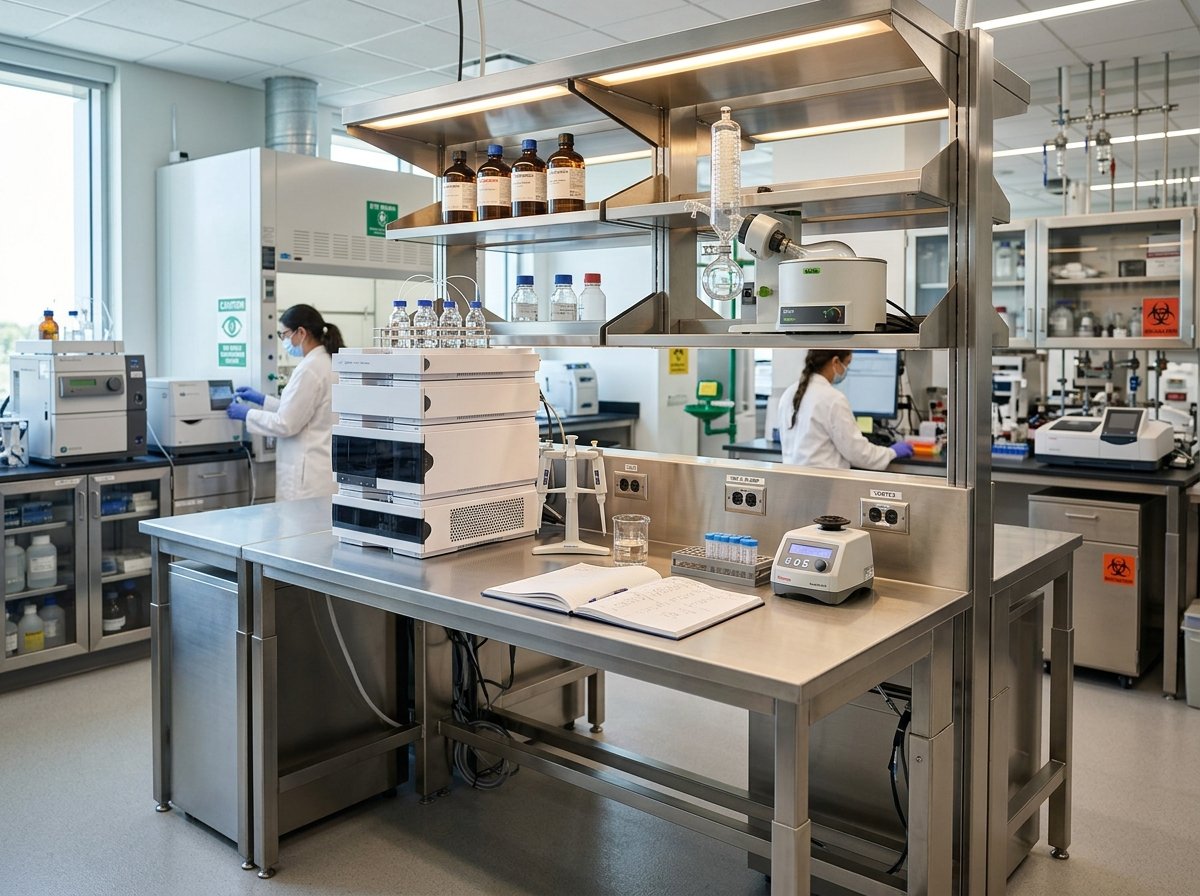
Benefits of Modular Laboratory Furniture Systems in Modern R&D
How flexible, configurable workstation architectures enhance analytical laboratory efficiency and accommodate evolving HPLC and spectrometry instruments.