
Fume Hood Containment & ASHRAE 110 Compliance in Chemical Synthesis
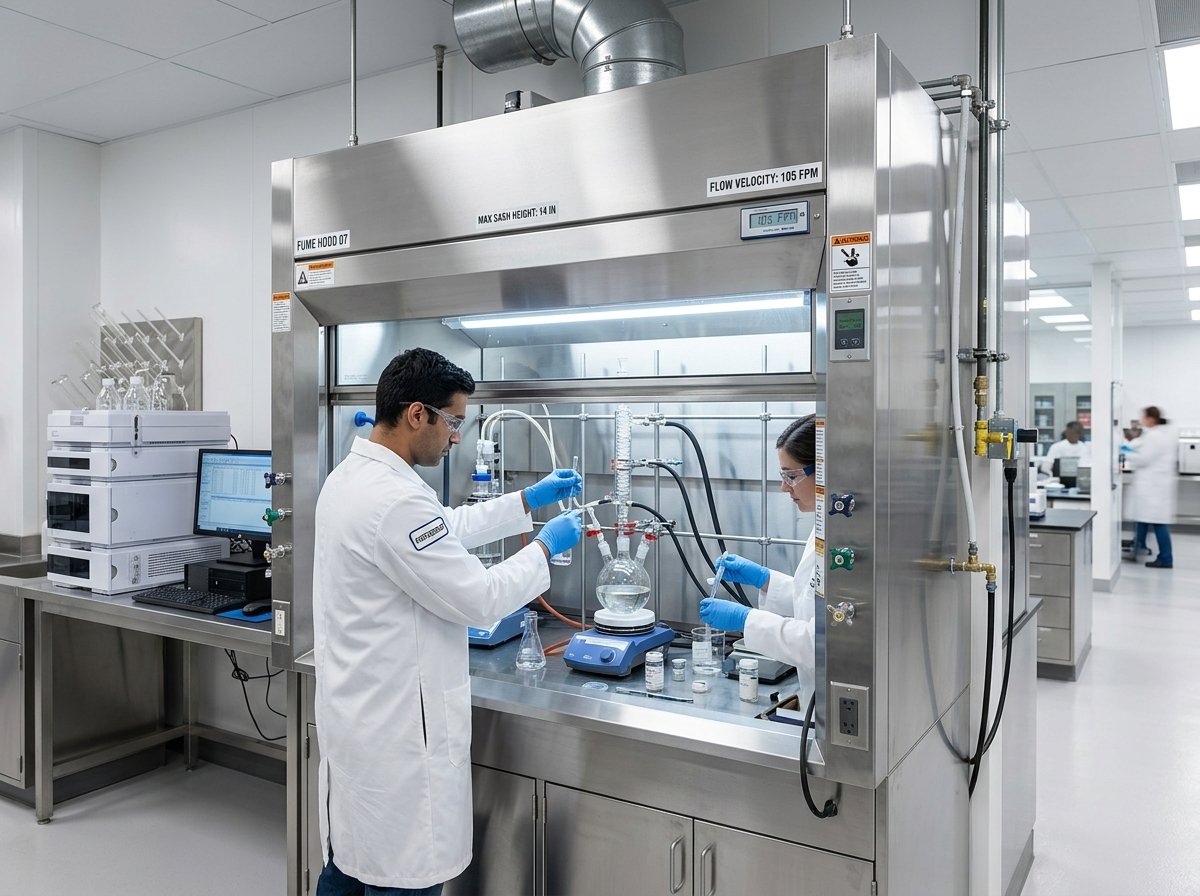
- ASHRAE 110 protocol verifies face velocity, airflow visualization (smoke testing), and tracer gas (SF6) containment.
- Aerodynamic bottom airfoils prevent turbulent eddy currents that pull hazardous fumes toward the operator breathing zone.
- Three-tier baffle systems maintain uniform vertical exhaust distribution across all chemical apparatus heights.
- Proper sash management and auto-closing mechanisms reduce conditioned exhaust air losses significantly.
Operator Protection: The Primary Directive
During active pharmaceutical ingredient (API) synthesis, acid digestion, and organic extraction, operators work with volatile reagents that produce noxious vapors and aerosols. A fume hood is the primary line of defense protecting laboratory personnel.
Containment performance depends not simply on exhaust fan capacity, but on the precise aerodynamic geometry of the hood interior, airfoils, and exhaust baffles.
Preventing the Vortex Effect with Precision Aerodynamics
When an operator stands in front of a flat-front fume hood, their body creates a low-pressure vortex that draws fumes forward into their breathing zone.
Himalayan Steel fume hoods incorporate curved stainless steel aerodynamic airfoils along the bottom sill and side posts. This design introduces a sweeping air stream across the work surface, continuously pushing fumes backward toward the exhaust baffles.
Validation under ASHRAE 110 Testing
Every fume hood manufactured in our Baddi facility is designed to pass rigorous ASHRAE 110 testing. This comprises local and large-volume smoke visualization tests to confirm zero stagnant zones, followed by sulfur hexafluoride (SF6) tracer gas testing with detector probes positioned in the operator zone.
Our hoods consistently achieve control levels below 0.05 ppm, demonstrating world-class containment efficacy.
Designing Equipment for Your Facility?
Share your user requirements or cleanroom layout drawings with Himalayan Steel Industries in Baddi. Our metallurgical engineers provide material test certificates (MTC), 3D CAD modeling, and competitive fabrication quotes.
More Engineering Insights
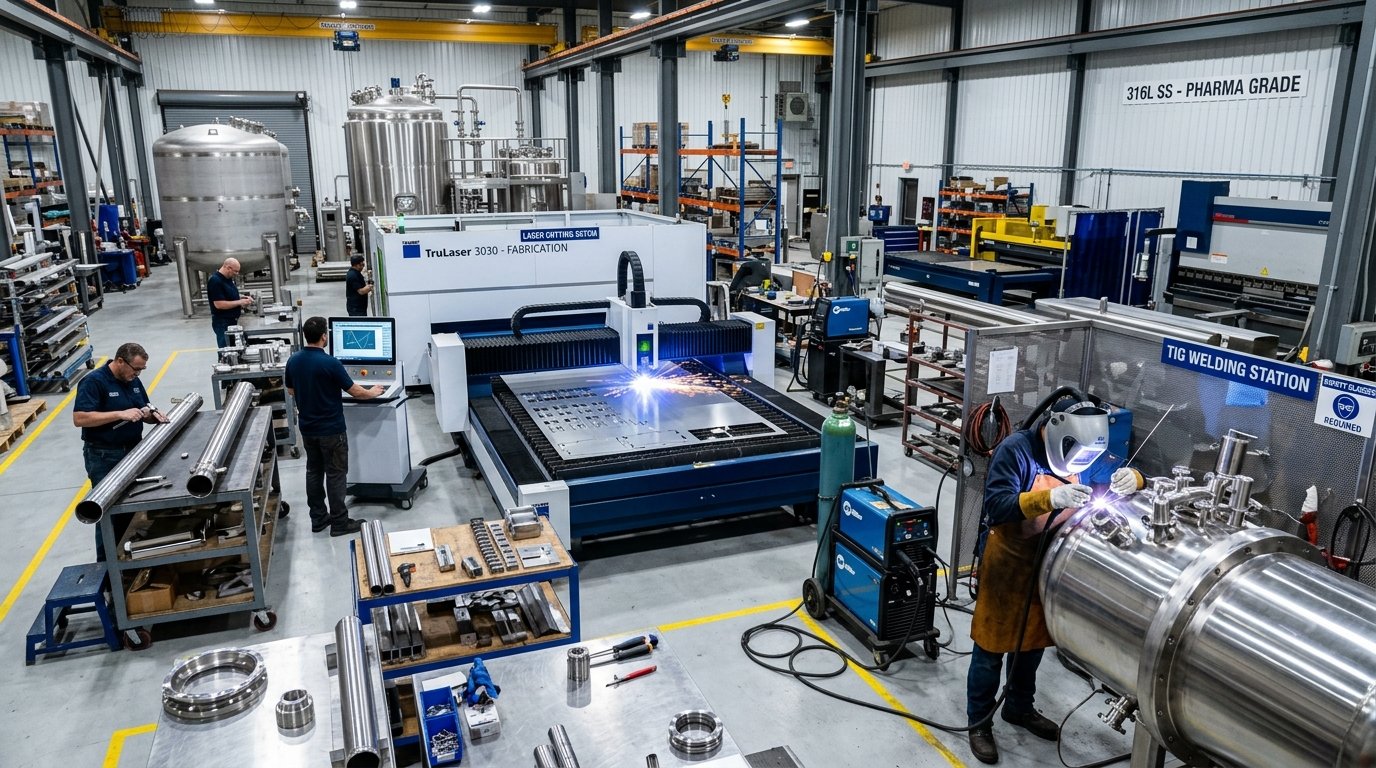
Material Selection in Pharmaceutical Equipment: SS 304 vs SS 316L
Choosing the correct grade of stainless steel is essential for cGMP compliance and corrosion resistance. Learn when to specify SS 316L with molybdenum addition versus SS 304 in pharmaceutical manufacturing lines.
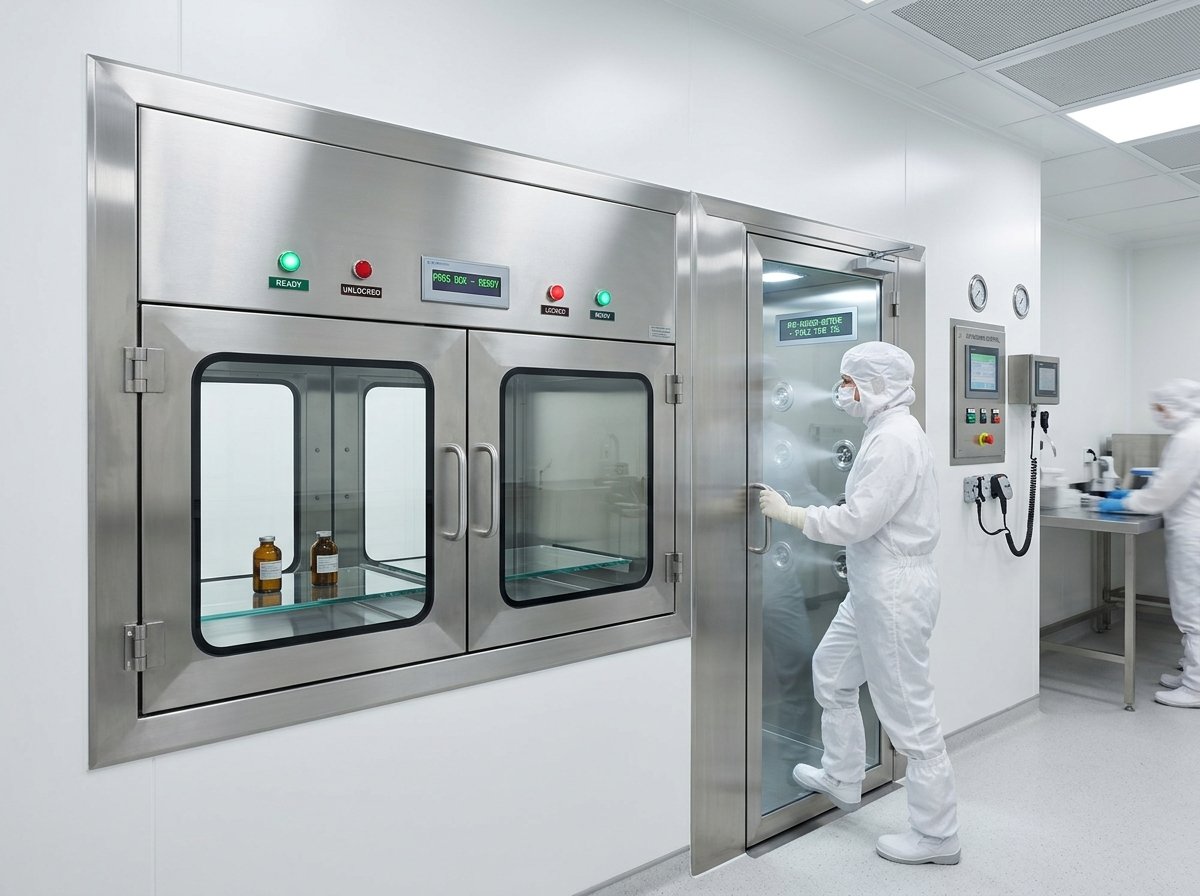
Understanding GMP Requirements for Pass Boxes & Air Showers
A comprehensive engineering guide to ensuring cleanroom transfer equipment interlocks and HEPA filtration meet ISO 14644 standards without compromising pressure cascades.